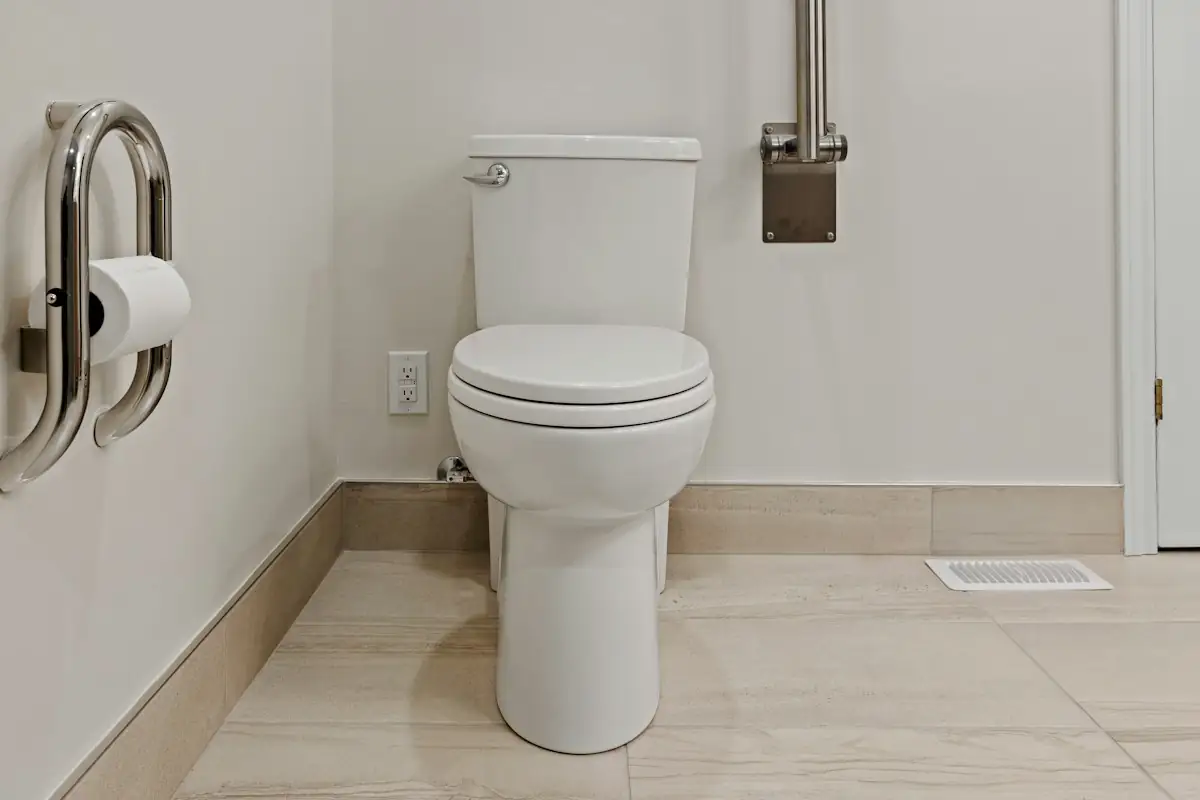
First, stop the overflow
Before anything else, reach behind the toilet and twist the little stop on its supply line to the right. If it is seized, lift the tank lid and pull the flapper closed by hand, or lift the float to stop the fill. That keeps the bowl from spilling while you think.
Plunger, then auger
A flange plunger, the kind with a soft extension at the bottom, seals into the toilet outlet. A flat cup plunger does not. Give it a dozen firm strokes with water covering the cup. If nothing moves, stop.
A plumber then uses a closet auger. Its cable sits inside a bent tube with a rubber boot that protects the porcelain. It follows the trapway around the bend and either hooks or breaks up what is there. Toys, cotton swabs, dental floss, cat litter and so-called flushable wipes are the regulars.
- Bowl fills and drains very slowly after flushing
- Water rises near the rim, then sinks over minutes
- Gurgling from the tub or shower when the toilet flushes
- Recurring clog with the same toilet
Before anything else, reach behind the toilet and twist the little stop on its supply line to the right.
From the counter
When the toilet has to come off
If the auger will not pass, or an object is stuck that it cannot grab, we pull the toilet. That means shutting the water, draining the tank and bowl, removing the bolts and lifting it off the flange. We can then reach the object from below and run a larger cable into the closet bend and the stack. Then the bowl gets set back down on fresh wax.
Low-flow toilets
Many North York houses swapped to low-flush toilets under the old City of Toronto toilet rebate years ago. Some early models clog easily because they lack flushing power. If your toilet clogs weekly, a better-designed modern toilet may be the real fix.
Questions
Can I use drain chemicals in a toilet?
Please do not. They rarely work on a toilet clog and leave caustic water for whoever has to auger it.
Will a clog damage the toilet?
A clog itself will not, but forcing a metal snake without a protective boot can scratch the bowl. A closet auger avoids that.
How the job runs
- You callDescribe what is dripping, backing up or cold, and the cross streets.
- We ask questionsAge of the building, pipe type if you know it, where the shut-off is.
- We open it upTrap off, clean-out open or wall cut: find the actual fault before quoting the fix.
- We test itOpen each tap on that run, watch the joints dry and show you what came out.