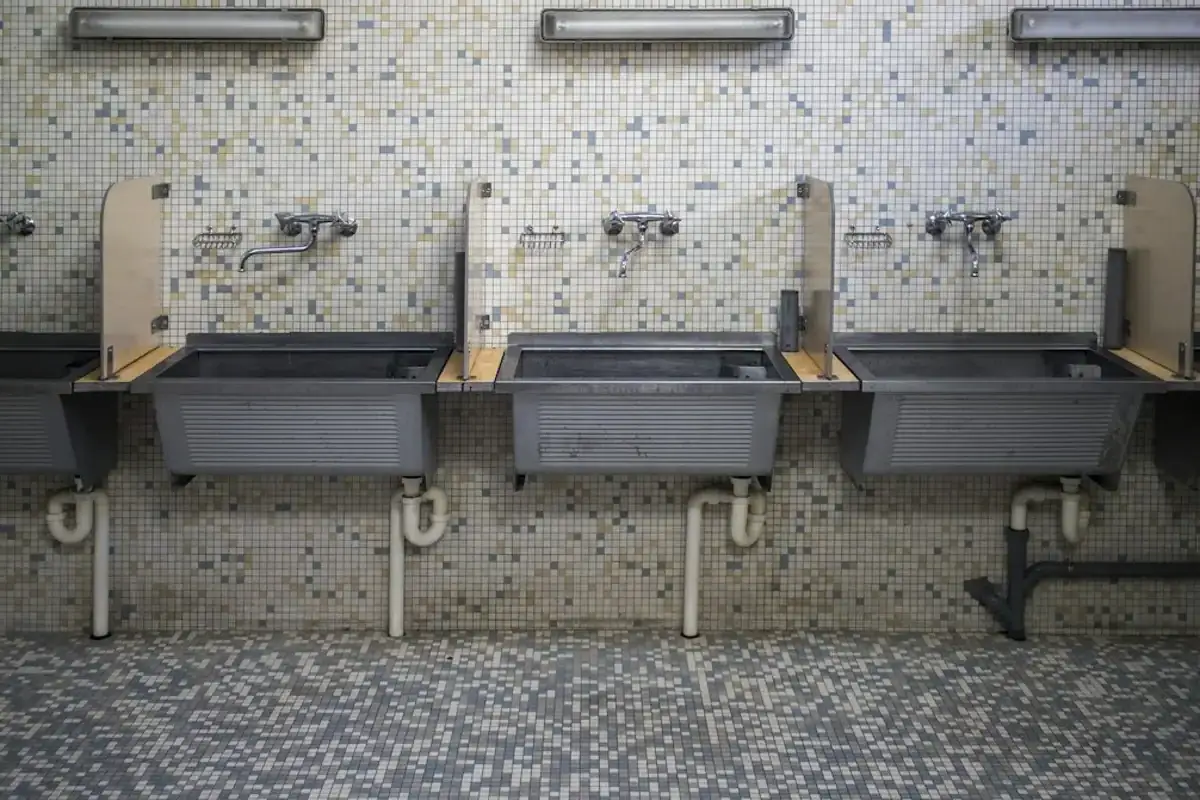
Signs the kitchen line is closing up
- Three-compartment sink drains slower after every dish rush
- The floor grate by the dishwasher gurgles or pushes water back up
- Sour, rancid smell near the interceptor lid
- Water standing in the mop sink overnight
- Backups that come back days after a cable was run through
Why a cable alone does not last
A drum machine punches a hole through a grease plug, and the line flows again for a while. The walls of the pipe are still coated, so new grease catches on the old layer and the blockage returns. Hydro-jetting uses a high-pressure nozzle that scours the full inside diameter of the pipe and pulls the loosened grease back toward the clean-out. That is the difference between a call every few weeks and a line that stays open.
A drum machine punches a hole through a grease plug, and the line flows again for a while.
From the counter
What the visit includes
- We find the clean-outs for the kitchen branch and the building main.
- The interceptor lid comes off so we can see the inlet and outlet baffles and the grease layer depth.
- Kitchen branch lines are jetted from the furthest fixture back.
- A camera goes in to check for sags, broken joints or grease still clinging.
- Every sink and floor drain is run to confirm flow.
- You get a short note of what was found, with footage on request.
Interceptors and the city bylaw
Toronto's sewer use bylaw puts the onus on food businesses to stop fat and oil reaching city pipes, which is why interceptors are installed. The bylaw has rules on maintenance and record keeping, so check the current requirements with the city. Emptying the tank itself is a job for a liquid waste hauler; we clear the plumbing either side of it and tell you when the unit looks overdue.
Habits that help between visits
- Scrape every plate into the green bin first
- Basket strainers stay in at every sink and floor grate
- Fryer oil goes in the rendering bin, never the sink
- Avoid enzyme or chemical dumps that just move grease further down the line
Questions
What jetting interval suits a restaurant kitchen?
It depends on menu and volume. A fryer-heavy grill line can need it monthly; a small coffee bar maybe twice a year. Once we have jetted and filmed the line one time, the footage tells us what interval makes sense.
Can you work before we open?
Ask when you call. Early-morning or after-close visits are common for kitchens, so the line flows again before the first order.
How the job runs
- You callDescribe what is dripping, backing up or cold, and the cross streets.
- We ask questionsAge of the building, pipe type if you know it, where the shut-off is.
- We open it upTrap off, clean-out open or wall cut: find the actual fault before quoting the fix.
- We test itOpen each tap on that run, watch the joints dry and show you what came out.