The four places we almost always need
- The main shut-off and meter. About a metre of clear space in front of it.
- The floor drain and clean-out. Usually in the laundry or furnace room. Move bins, paint cans and the shoe rack. If a carpet runs over the drain, roll it back.
- The water heater and furnace area. Room to stand in front of the tank, a clear line to the drain valve and a path up the stairs if the tank is coming out.
- The stack. The big vertical drain pipe, often boxed in behind finished walls. Clear shelves away from it in case the access panel has to come off.
Under the sink
Empty the cabinet completely: cleaners, garbage bin, the cutting boards. Lay a towel on the cabinet floor and put a bucket close by. If the leak has soaked the cabinet bottom, leave it in place so we can see the stain pattern; it often shows which joint has been weeping.
Empty the cabinet completely: cleaners, garbage bin, the cutting boards. Lay a towel on the cabinet floor and put a bucket close by.
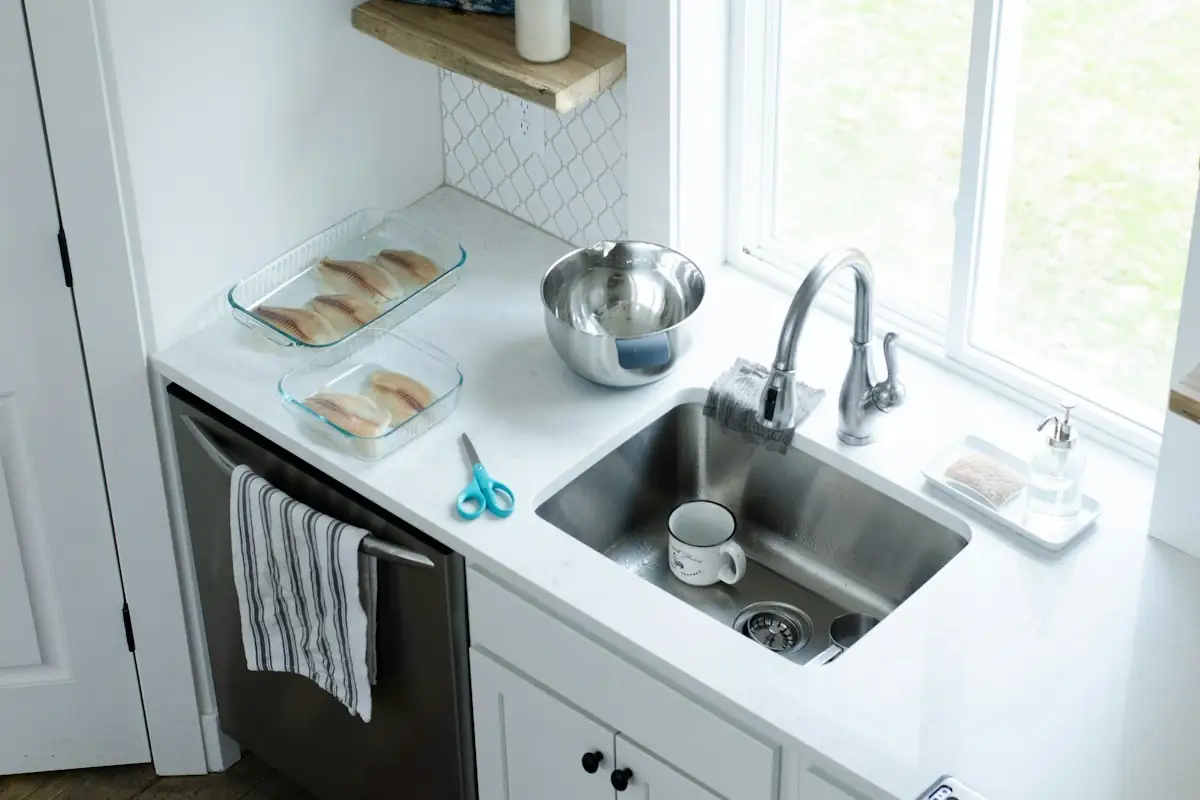
From the counter
Bathrooms
- Take bath mats, scales and stored items off the floor.
- Clear the tub ledge of bottles before a tub or shower drain is opened.
- If a toilet is coming off its flange, the plumber needs room on both sides, so move the laundry hamper and small shelves.
- Lift the access panel behind the tub if you have one, or tell us where it is.
Outside and in the driveway
For sewer work, camera inspections from an outdoor clean-out and hose bib repairs, keep a parking spot close to the house. A drum machine and jetter are heavy, and the van needs to sit within hose reach.
What to leave alone
Do not pull wet drywall or baseboard yourself before photos are taken, and do not throw out the part that failed. A cracked supply line, a split fitting or a corroded heater nipple tells both the plumber and the insurer what went wrong.
Kids, pets and fumes
Sewer work can release gas and odour, and an open trap can spill. Keep children and pets out of the room, open a window if you can, and have a light ready for dim basements.